Monday, March 12, 2012

Great Endeavor

Yeah, OK, I'm a Derby Dad. The shoe fits; I'm wearing it. Those of you who have been around for a few years have seen the lengths I went to for Fiona's cars the last two years. Well, this year, it was Aiden's turn to get the full treatment.

Trying to make up for the last-minute nature of last year's entry, and, realizing that I had to er, got to make two cars this year, I bought a couple of extra kits and decided to get an early start. (There's an enormous amount of irony here, but I'll talk about that later.)

So, I asked Aiden what he wanted to make. Sky's the limit, I said — I figured I'd let him choose, and I'd worry about how to implement it. Well, Aiden went beyond the sky, and said he wanted a space ship. I heartily agreed, and we started sketching.

Well, I started sketching, anyway. Where Fiona can't do enough on projects like this, I was finding it hard to keep Aiden involved past the first five minutes. I don't know why; I just haven't figured out how to connect with him and motivate him yet. He's a mystery to me in so many ways. So I did this largely in five- to ten-minute segments, as long as the attention held out. Maybe I'm a bad dad, I don't know. But I'm trying.

Around the beginning of July, we watched the final flight of Atlantis, and something clicked in my mind. Instead of making up a spaceship, I asked Aiden, would you like to make a model of a real one? Aiden liked it, and the plan fell into place.

Fortunately, the details of shuttle design are well-represented on-line, and some quick calculations showed that the whole thing, tank, boosters, and all, would fit very neatly into the required pine car sizes at 1:300 scale. Better yet, there were plenty of patterns at that exact scale for people that liked to build paper models. A few printouts, and we had our blueprints. We could start cutting.

One of the non-negotiable rules is that you have to use the block of wood that came with the kit. Here, I'm cutting the initial guides on the lathe.
Getting the shape...
...and cutting the shoulders down on the places where the wheels attach. There's a lot of sanding left to make this look good.

Fortunately, Aiden enjoys sanding. This is something I have a hard time explaining; Fiona really enjoyed sanding, too, both of them way more than I expected. Maybe it's the "hands-on"-ness of it, which isn't there for the cutting or painting. Not sure. Another thing I learned? Emery boards are perfect for kids and sanding. you can get all kinds of little details, in sizes just right for little fingers. A few bucks for a pack of 50 is a bargain, too.

The appropriate attire is essential to your pine-car building experience.

The orbiter went together in several pieces:

Then it was time for painting. One of the things that has always frustrated me about the pine car derby is the fact that the weeks and months preceding it are almost without fail COLD. Spray paint doesn't dispense properly below about 50°F, and it's hard to get a really smooth finish without it. Fortunately for this car, we got the main painting done back in August. The rest of the cars had to be done indoors, in the shed, with the little wall heater running full blast for at least an hour ahead of time.

I made some special holders for both the painting and the drying. It let me (or the kids) hold the piece, while the other person did the painting. I'll be using these for many, many years, I think.

Hand painting, believe it or not, is more work than all the prep necessary for spray painting. Aiden got a lot of coaching on technique.

Checking against the source.

The final product went together the night we had to turn the cars in.

It's the last-minute details you're proud of. I needed to add a few tenths of an ounce to bring the weight up to the 5.00 oz. maximum. I was about to unscrew the brass fitting I'd set into the back of the tank, and add lead shot, when I noticed a bullet tip among the weights offered at the last-minute pine car workshop before we turned them in. A little drilling, a little super glue, a perfect rocket nozzle.

I'm pretty happy with how the final product came out. Aiden was, too.

I left the remains of the turning on the front of the tank, but cut it down to serve as a rest for the car to sit against the starting pin.

Andy to Aiden: We are go for launch!

Friday, March 09, 2012

....and it's ours.

I've been twitching all week. I'll look at the date, and suddenly panic: ay ay ay ay, I forgot to pay the.... oh, wait. And then I remember.

It's been a habit over the last 14 years, dutifully plugging away every month, sometimes more as finances allowed. But with our latest tax return, one little long-term goal finally came to fruition.

Patience Corners is ours. All ours.

If I've never explained it before, Patience Corners is the name of our house — our little cottage down by the lake. It's common here to have the name of the house out front; Shamrock, Wawataysee, Hannah Harbour, Tailwind, Aspir-Inn, and many more. We just never got the sign made.

Yes, it's the name of a quilting pattern — Deborah named it — but in our minds it pointed to the four (now three...) towering maples at each corner of our property, and for the odd resignation that we were settling in here for a while. For someone who has moved, on average, once per year until that point, buying a house was like merrily wrapping ourselves in chains; like dropping the balled roots of a tree into the soil and filling in the hole. It seemed so reckless, a permanent solution to a temporary problem.

But here we are. The longest either of us have ever lived in one place. Stable enough that other people have moved to be closer to us. Long enough to stretch out into the loamy soil, and find that it's not bad to be rooted.

* * *

We told the real estate agent what our price range was. She laughed. And then she looked at us with amused pity, loaded us into her Cadillac, and took us all over Warsaw to look at houses that fit the bill.

Most of them were awful. Huge, gaping holes in the floors. Huge, gaping holes in the roof. Bedrooms that wouldn't even fit a bed. Dark, dreary places, filled with the stench of cigarette smoke and littered with old Penthouse magazines. We were pretty discouraged as we rolled up to a little white house down by the lake.

"I saved this one for last," our agent told us. We walked in. It was bright and airy, with big windows, fresh paint, and new carpet. There was plenty of room for us and our stuff. "We'll take it," we told her, and she whipped the paperwork out of her purse, already half filled out. We wrote the offer on the kitchen counter. Deborah wanted to wheel and deal, lowballing the offer. I fixed her with what I hoped was a steely gaze. "Which of those other places do you want to live in if we don't get this house?" We offered the full price with a sage nod from the realtor. "Now, if you don't mind, kids, I'm going to leave you here. I'm going to take this directly to the seller." We gave a happy shrug, and she was off. Good thing, too: while the sellers were signing to accept our offer, a competing offer was coming in on the fax machine.

We got this place by five minutes.

* * *

The boundary lines have fallen for me in pleasant places; surely I have a delightful inheritance. — Psalm 16:6

Thursday, January 26, 2012

The Trouble-Free Blessing

Had I kept up with my blog (or my blog, somehow, magically, kept up with me) you'd likely know about the ongoing saga of our car.

Now, some of this trouble, I've brought on myself: I don't like to spend money on cars. My aversion isn't as deep as it used to be; for many years, I rode my bicycle everywhere, and looked down on people who drove. It was a moral superiority born of envy, poverty, two-wheel pride, and a large serving of sour grapes—a conflicted condition, to be sure. Very conflicted.

All the cars I've ever owned, combined, come out to a bit over $5000 — about what I paid for my motorcycle. (Priorities, see?) I nursed my '77 Phoenix along until it was eligible for classic car plates. I loved my station wagon until I started losing a friend a week from frequent rescues. I've had two $1 cars. Two more have been gifts of love and deep generosity. One, I actually paid a whole $500 for. I've never had a car payment.

I'm sure that part of this (ahem) extreme thriftiness is from the culture that I grew up in. One of the enduring images of my father is of him making major repairs on our early '60s Toyota nearly every weekend in Costa Rica. "Use it up, wear it out, make it do, or do without" was the motto to go by.

Even so, long about September, even I had to admit that our car was on its last legs. This is the car where we kept a rubber mallet under the front seat, to start the car when it would stop and not re-start. It was creeping up on 190,000 miles, and I had a several-thousand-dollar list of repairs that it needed to keep it truly road-worthy. I had a stack of parts that had fallen off of it. Deborah hated the idea of getting a new car, but I knew it was a matter of time before we'd need to replace it, and I couldn't think of how to get much—if any—money out of it, and where I'd find the funds to replace it.

God took care of that.

And that was a brand new tire, too....

It didn't take much—just a guy pulling out of a gas station, at just the right moment; enough to total the car, but leave it driveable for a week; enough to make it a total loss, but not hurt anyone.

Deborah decided not to smile for the picture. I guess I wouldn't, either.

The insurance company offered us 10 times what I had thought I could get for the car (hint: the junkyard offered $200) and set us up with a rental just in time for us to take on vacation. I didn't want to give that car back — a 300 HP Dodge Charger — but I knew I'd have to. I started shopping.

About the best thing I can say about the process was that very few people outright lied to me. Oh, sure, we got the pink-sweater-in-the-passenger-seat ("Oh, I've been driving my daughter around in it. . ." Really, in the seat with the broken seatbelt?) and the car that wouldn't start in the pouring rain (Thanks, God) even though it had run fine the day before. But for the most part, we got honest people who listened to our needs, and then would point to the one car on the lot that met the criteria. Most of them were awful.

Hmm. I don't think I'll buy this one.

Discouraged after chasing one option down as far north as Mishawaka, we walked across the street from Mr. Pinksweater to see the car dealer there. "We don't have anything in the price range," he said, "but I have a friend that works at a lot just down the road. They have cars that might fit what you're looking for."

Did they ever. A whole lot, stretching out, hundreds of cars. All of them in our price range. It was like a revelation, angels singing forth. And there, right where we pulled up to park — "Look, Andy, it's our car!" And it was — nearly identical to the car we'd just lost, but two years newer and with 100,000 fewer miles. We knew it would fit three car seats across the back. We looked around, but we kept coming back to that one. With the purchase price, tax, title, registration, inspection, and a few new tires, we came within $2 of what we'd budgeted.

Yay! New car!

It was perfect. It was a blessing.

We reveled in it for months. We were even, I dare say, a bit smug about it. Then, one night, I got a desperate call from Deborah. Every light on the dashboard was lit up, and flashing like a Christmas tree. The numbers on the gas gauge and climate control jumped wildly, from Full Tank to -45° to 0 mpg and, mysteriously, "c." I talked her home, assuring her that, if the car was still running, she could ignore the antics on the dash. Finally, it settled down into a pattern of displaying the mysterious "c" and running the air conditioning full blast. I welcomed home a very cold Deborah, and told her I'd look into it.

The next day, I looked into it, and, since Deborah needed to go to work, I pulled the fuse for the air conditioning, so that she could drive in relative comfort. Unfortunately, by doing so, I also pulled the fuse that would have alerted her to the fact that the battery wasn't charging. A tow truck ride later, and we had a new alternator, battery, but still some odd behavior on the dash. My mechanic worked on it for hours, tracing one potential problem after another, but the haunted dash persisted. His best estimate for the next step involved pre-authorizing up to eight hours of labor for tracing down wiring faults — a figure echoed by the Cadillac dealership in town. We re-enabled the air conditioning, and stuck in a few blankets.

A few days later, on the way to church, an odd thwapping sound emanated from under the hood. I pulled over and had a look. The serpentine belt was shredding. I got it home, and installed a new one. Once I got it all together, though, I realized what the original problem had been: the new alternator was off by about a quarter of an inch, causing the belt to jump up on the edge. I couldn't adjust the pulley off the shaft, so I gave our mechanic a call. He graciously sent out a tow truck, and, because he couldn't move the pulley either, we went home with yet another new alternator.

Apparently, I groused about it often enough on Twitter/Facebook (I often update my status on Twitter, so that I won't be distracted by the rest of Facebook) that Dad called me up to see if he could have a go at solving the dash problem.

We started out by disconnecting the battery, and then spent the next few hours trying to get the battery connected again.

Stripped threads. On a battery terminal. Aaaaargh.

(We also ran the car out of gas. That's another neat little "feature" of this whole mess — no gas gauge.)

On the way home from that adventure, the whine that had been developing under the hood stopped, and a new dash light came on: the battery was not charging. Thank God for cell phones. My parents followed me halfway home from Valparaiso, until we met up with Paul coming the other way. Once the battery ran out, we'd stop, charge up the battery for 10 minutes, then hit the road again for another 5 miles.

Mere days before, I'd helped Paul pick out a new car from that same dealership. It came with jumper cables.

We kept that up until 2 a.m., when we were finally within striking distance of Warsaw, and we had a recognizable place where we could park it, and call the mechanic. A tow truck ride and yet another alternator later (the auto parts supplier now owes my mechanic several hundred dollars in towing charges) and we're back on the road, driving in style, if not comfort.

In the meanwhile, we're back to hunting and theorizing. Fortunately, our mechanic has the wonderful ability to separate his feelings about the car and the customer ("Andy, I'm starting to hate your car") and has been giving Dad and I feedback on some of our ideas about what to try next. Last time I was in there, he showed me some new software he was trying out. We plugged in the make, model, and year, and drilled down to climate control issues — sure enough, there was the problem, described in perfect detail, down to the lowercase "c" on the dash, along with what other mecahnics had done to fix it. There were six entries on-screen, and they all showed the same thing: replace the body control module (BCM). It would have been a revelation, except for one thing: We'd already tried that.

Oh, look. It's snowing. Inside the car.

We're working with a new theory, now, that it's the PROM (Programmable Read Only Memory) unit that sits between the computer and the rest of the wiring. Of course, they don't make them anymore, so I've been contacting junkyards from all over, trying to find one for a reasonable price. We may get there yet.

So, this car is a blessing. Did anyone say it had to be trouble-free?

Tuesday, November 08, 2011

Steampunk'n

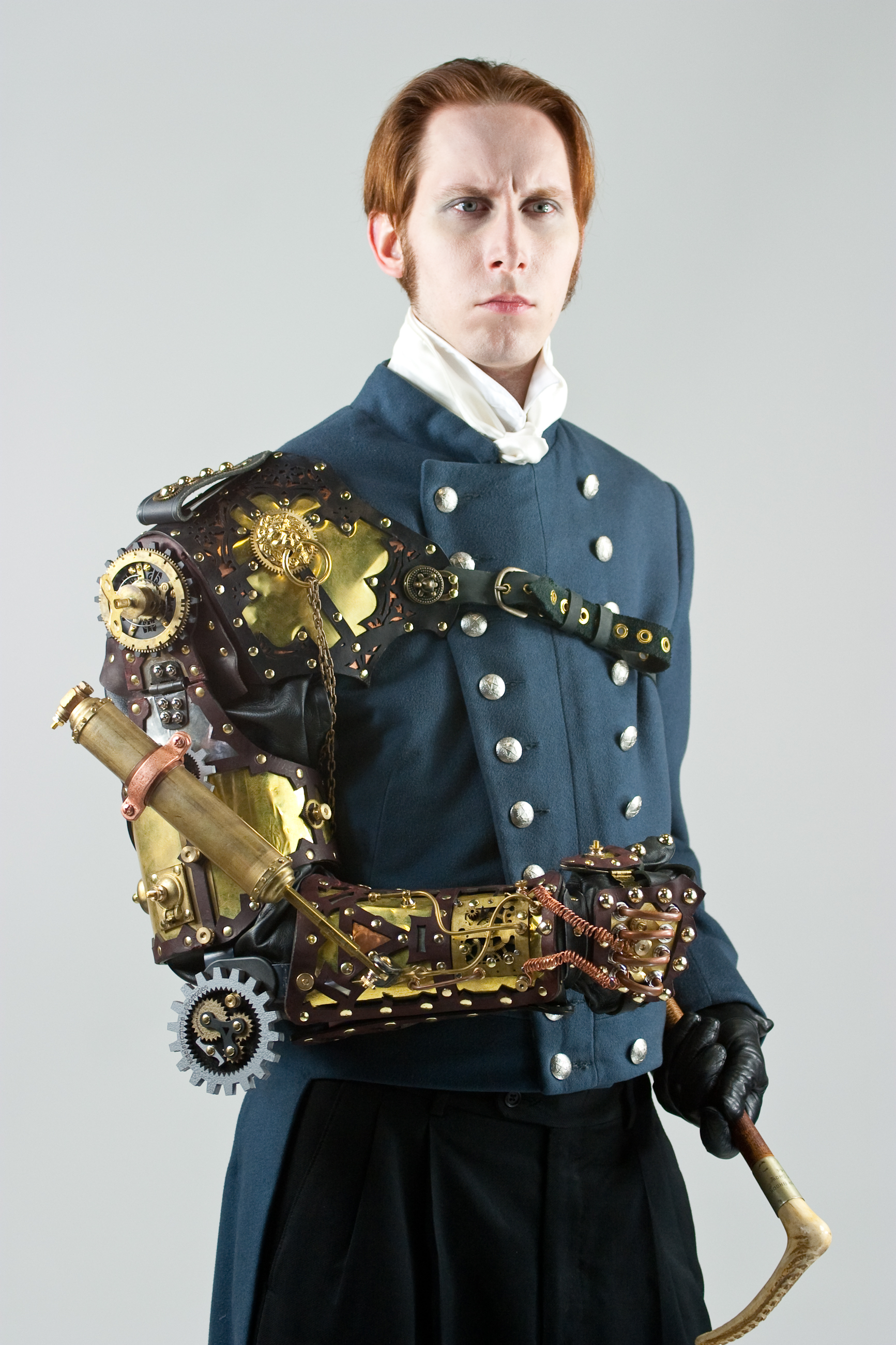
Outdoing myself is now an annual thing. The only thing I can say in my defense is, if I had found all my carving tools, it would be even more complicated. I take some comfort in the fact that wild pumpkin carving is now a much more common thing, so I'm not so far out of the ordinary anymore. Yay. Rats.

You may or may not be aware of steampunk, a genre of sci-fi/fantasy (or, more properly now, speculative fiction) commonly set in the steam-powered Victorian England, which has taken on its own unique sense of style — lots of brass, gears, filigree, corsets, and heavy doses of "what if?" I confess my fascination with the visual theme, even if the fiction itself doesn't seem all that magnificent.

Of course, if you can get away with something punny, like crossing "steampunk" and "pumpkin," why, then, the gourds practically carve themselves:


Hey, I didn't take all those mechanical engineering classes for nothi.... OK, OK, I never took any!


This is also the first year that I went out to the shed and broke out the power tools in order to speed up the process. It made all those itty-bitty holes easier, but it feels like some kind of line has been crossed.


I didn't set out to do it this way — but this counter-weighted wheel, with the light, looks like cast iron being poured out. Unintentional, but I like it.

Of course, I wasn't the only one carving, so I tried to leave mine towards the end, and help the kids with theirs first. Aiden chose his theme, and we worked it out on paper. Fiona drew hers, and Deborah helped her carve it. Risanna got to scoop seeds out of hers.


Mine, Paul's Triforce-and-Master-Sword (which more people reconized than I would have thought), Risanna's bear.


Fiona's dragon.


Aiden's (pumpkin) cherry bomb, and Deborah's Nightmare Before Christmas-inspired Jack Skellington.

So, what did you make this year?

Wednesday, November 02, 2011

...and that's another way to solve the problem!

Let me get you in on a dirty little secret. It's something I've learned after years of working in publishing and web design.

People don't read.

You might find this an ironic observation, given that I work for an academic publisher, but I tell you it's true, and it's especially true of academics — people don't read.

I have my theories. They may all be wrong, I don't know. But I have them anyway. One is, people don't read because it's too easy. Most literate people can't help but read something; you see it, it registers as a word instantly, and — this is the critical part — then you decide whether or not to pay attention. In our information-rich, give me your attention please society, we're surrounded by words . . . and we ignore most of them.

Don't believe me? Stop and take a look around for a moment. Words, words, words. If your desk looks like mine, I'm willing to bet that, without turning your head, and without counting these words here, you can see around 500–1000 words. You're ignoring all of them (including the ten sticky notes that you wrote and put in prominent places in order to remember things.)

That's just you and me. Enter the academic, stage left, with his nose in a book. He is, obviously, reading. Or is he? My answer is, probably not. Remember the last term paper you wrote? Did you read every source, cover to cover? Of course not. You skimmed it until you found what you were looking for. You noted it, cited it, wrote your paper, you kept moving. The only difference is that the academic has gotten good enough at this to do it for a living. Their term papers get published.

And so we come to the relevant question: how do you alert someone like this to something they aren't expecting?

Case in point: each year, my employer attends and displays at a major conference. We're one of the bigger players in our market (big fish, little pond) and we generally try to get about six booth spaces to display our wares. In order to keep such a space all within easy reach, we typically reserve two sides of an aisle — books to the left, books to the right, and three booths' worth of books across the aisle.

Now, this creates two problems. One is the person who finds the booth staff first, and asks, "Where are the books?" It's easy enough to point out the stacks to them. The second is the person who finds the books first, but doesn't know to look to the other side of the aisle to find the checkout desk. This is harder.

The easy answer is, of course, to put up a sign saying that the checkout is on the other side. But people aren't looking for such signs — they're looking for a cash register (does anyone use these anymore at conferences?) or a person (there are plenty of those around) or . . . what?

Our solution? Make a sign they can't help but read.


Specifically, we made them in Sumerian, Neo-Assyrian (both use cuneiform), Egyptian, and bet-you've-never-heard-of-it Hieroglyphic Luwian. Can you read it? I can't — but we have customers who can. Customers who are quite proud of that ability, actually, and who happily contributed their expertise into making the top halves of each sign.


Why does it work? Well, for the customers that can read it, there's the unexpected, proud rush of being able to use their skills in an everyday setting. For the ones that can't read it, there's what Chip and Dan Heath call a "knowledge gap" that invites them to learn more — and gets them down to the English translation near the bottom.


The added bonus is that it's also marketing: We get it. Our target market is ancient Near Eastern studies; we want people who can read this stuff. There's nothing like showing them that we literally speak their language. Outsiders, at the very least, get a memorable introduction to what we do.


My part in all of this was quite fun. I got to take the handwritten samples (or in the case of the cuneiform, PDF) and either typeset or convert each one into a format I could use.


My biggest barrier was learning to typeset Egyptian, but once I got into it, it was surprisingly easy to do. Having the transliteration below helped a lot.

Next, I wrangled the various pieces out of Photoshop, InDesign, and JSEsh, and got them into Illustrator, where I cleaned up the paths and got them ready to send out to Ponoko. (I don't get paid to promote Ponoko. I promote them anyway. Although if they're reading this. . . .) Most of the programs used for creating these languages aren't at the same level of development as other software (wonder why?) so there was a lot of cleanup involved.

A few weeks later, I got my expected package, and I got an excuse to get crafty.


It's silly, but I love this tag on the boxes. I really do feel this way when I get a package with something I've designed!.

I was a bit concerned about how I was going to get white engraving to show up on white plastic, until someone pointed out that the protective paper they apply to the acrylic forms a perfect, precision mask.


A little masking tape and a spraycan later, and that problem was solved.


All that was left was to wear my fingernails down to stubs peeling off the protective paper and revealing the final product.


Why stop at the "obvious" solution to a problem when you can have this much fun with it?


Several people have now asked who supplied the various texts for this project. Gary Greig (University of Chicago) supplied the Egyptian; Annick Payne (Freie Universität Berlin) contributed the Hieroglyphic Luwian; Simo Parpola (University of Helsinki) sent in the Sumerian; and repeat co-conspirator Bob Whiting (also of the University of Helsinki) gave us the Neo-Assyrian text.

Friday, July 29, 2011

You've got to start somewhere

We were looking through some pictures on the camera, when we came across a few that neither Deborah nor I remember taking. Looks like Risanna is getting an early start on photography!


Welcome, my dear, to a fascinating, maddening hobby. My your frames be free of camera straps, and your grip be steady and true. It gets better from here.

Monday, June 27, 2011

Fiona Joins the Glasses Club

Next up, braces? Hmmm.

Fiona's first grade teacher and the school nurse had been after us for a while to get Fiona's eyes checked. It didn't make sense to us, though, because the could obviously see very well at both a distance ("Look Daddy, there's a rabbit on the other side of the field!") and up close ("Look Daddy, this tiny bug has claws like a lobster!") but finally, we gave in and took her. Turns out one eye was doing great — well enough that the other eye was just taking a break and goofing off. So now Fiona has joined that grand Kerr tradition of being bespectacled.

Of course, now we have new problems. Now think, Fiona, do you remember where you took them off...?

Saturday, June 18, 2011

Not Complaining

One, two, three, four. That's the number of large band-aids I see on my abdomen, each tender to the touch, each with a a much deeper echo of unease below it. Comfortable? No, but I'm certainly not in agony, either.

I had hernia surgery Tuesday.

It all seems unreal. That morning, feeling fine, I went into the hospital, where I was shaved, scrubbed, knocked unconscious, inflated with CO2, stabbed four times (six if you count the IVs), patched with mesh and dissolving screws, and here I am typing like it's no big deal.

In my father's time, you'd have been lucky to be standing upright at the end of the week, not gently sanding the drywall in the back room as I was this afternoon. (My father also assured me I'd still be able to father children afterwards — I hadn't realized that was a even a question, but the surgeon also asked me if I was done having kids — Deborah anticipated the question and told me to say no. All these people know something I don't.)

So even though I'm mostly feeling fine, I'm wondering what hurdles (not literal ones, I hope...) I have to clear to be approved to return to work. Obviously, I can sit at a computer, which is what I do for a living — well, that, and unload trucks, but I think I'm excused from that for a while, given that's what got me into this trouble in the first place. I'm guessing the main criteria will involve insuring that I can survive the drive there and back, and won't burst open if I go over a bump. (Sorry to be graphic. It's a real concern.)

In the meantime, people have supplied me with a surprising number of things that they'd like me to get done while I'm convalescing. I've got two websites that want attention, a two-hour speaking engagement to plan, a room to drywall and paint, and any number of other things. A get-well card from my co-workers came pre-printed with 20 things to do while getting better; they added 8 of their own! But for now, I'm doing a lot of something I've neglected over the past seven years: sleep. It's wonderful stuff. Not sure how I've gone so long while ignoring it.

G'night!